

Faculty Research Profile
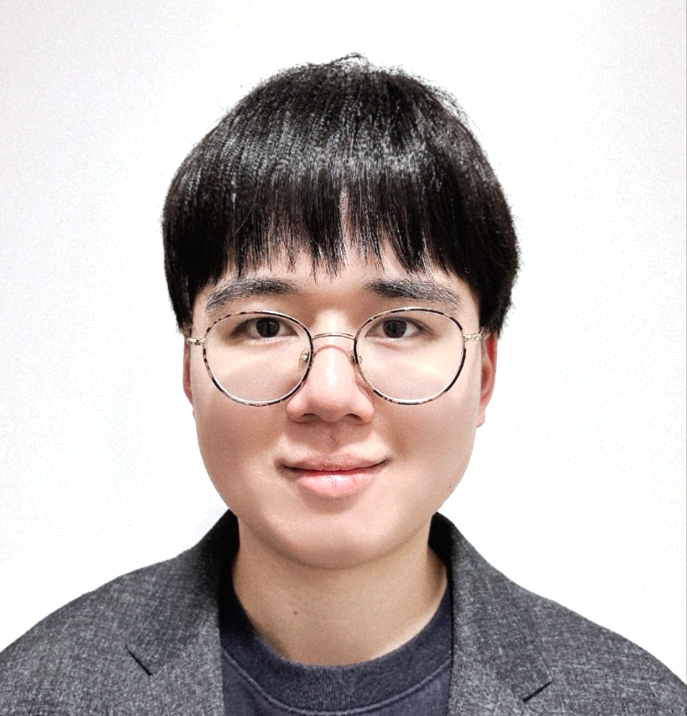
Insung Kong


학력
· 2024: Ph. D., Statistics, 서울대학교
· 2018: B.S., Statistics, 서울대학교
주요 경력
· 2026~present: 조교수, UNIST
· 2024~2026: 박사후연구원, Unisversity of Twente
수상/학회/외부활동
· 2024: 자연과학대학 최우수 박사학위논문상, 서울대학교
AI 통계이론 연구실
Statistical Theory of AI Lab
우리는 통계적 학습이론을 바탕으로 인공지능의 수학적 기초를 정립하는 것을 목표로 합니다. 핵심 목표는 딥러닝과 대규모 언어모형을 비롯한 현대 인공지능 방법들이 왜 효과적으로 작동하는지를 이해하고, 이들의 이론적 성질, 한계, 그리고 작동 원리를 밝히는 것입니다. 이러한 이론적 통찰을 바탕으로, 기존 방법론의 한계를 극복할 수 있는 통계적 지식 기반의 새로운 기계학습 방법론 또한 개발합니다. 더불어, 생물학적 원리에서 영감을 받은 신경망을 비롯한 미래 인공지능 기술에 대한 방향성을 수학적 이론을 활용하여 제시합니다. 이를 통해 인공지능에 대한 이론적 이해를 심화하는 동시에, 차세대 기계학습을 위한 원리 기반 방법론을 개발하는 데 기여하고자 합니다.
We focus on developing mathematical foundations for artificial intelligence through statistical learning theory. Our central goal is to understand why modern AI methods, particularly deep learning and large language models, work so effectively, and to clarify their theoretical properties, limitations, and underlying principles. Building on these theoretical insights, we also develop new machine learning methodologies that leverage statistical knowledge to overcome the limitations of existing methods. In addition, we use mathematical theory to provide guiding principles for future AI technologies, particularly biologically inspired neural networks. Through this effort, we aim to deepen the theoretical understanding of artificial intelligence and contribute to the development of principled methodologies for next-generation machine learning.

연구분야
통계학, 기계학습, 인공지능, 수리신경과학
연구주제
통계적 학습이론, 심층신경망, 트랜스포머, 공정한 AI, 인과추론, 설명가능한 AI, 생물학적 원리 기반 신경망
Statistical learning theory, Deep neural networks, Transformers, Fair AI, Causal inference, Explainable AI, Biologically inspired neural networks
논문
· Constructive Approximation, “On the expressivity of deep Heaviside networks”, I. Kong, J. Chen, S. Langer, J. Schmidt-Hieber, 2026+.
· JMLR, “Posterior concentrations of fully-connected Bayesian neural networks with general priors on the weights”, I. Kong, Y. Kim, May 2025.
· TPAMI, “Fair Representation Learning for Continuous Sensitive Attributes using Expectation of Integral Probability Metrics”, I. Kong, K. Kim, Y. Kim, May 2025.
· ICML, “Covariate balancing using the integral probability metric for causal inference” I.Kong, Y. Park, J. Jung, K. Lee, Y. Kim, August 2023.
· ICML, “Masked Bayesian Neural Networks: Theoretical Guarantee and its Posterior Inference” I.Kong, D. Yang, J. Lee, I. Ohn, G. Baek, Y. Kim, August 2023.