

Faculty Research Profile
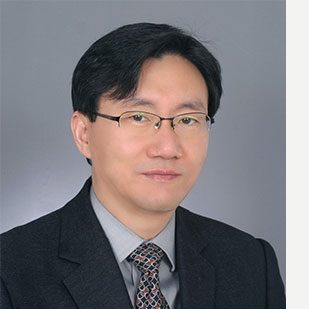
Cheol-Min Park


학력
Post-doctoral Fellow, Department of Chemistry, Stanford University, USA (1998)
Ph.D. Department of Chemistry, Seoul National University, Korea (1995)
M.S. Department of Chemistry, Seoul National University, Korea (1992)
B.S. Department of Chemistry, Seoul National University, Korea (1989)
주요 경력
Professor, Department of Chemistry, UNIST, Korea (2022 - present)
Associate Professor, Department of Chemistry, UNIST, Korea (2013 - 2022)
Associate Professor, Division of Chemistry and Biological Chemistry, Nanyang Technological University, Singapore (2008 - 2012)
Research Investigator, Global Pharmaceutical R&D, Abbott Laboratories (Abbvie), USA (2000 -2008)
Research Chemist, Central R&D, DuPont, USA (1998 - 2000)
유기합성 및 의약화학 연구실
Synthetic and Medicinal Chemistry
Organic molecules are found as key players in many fields from materials to medicine. Our research focuses on the development of new synthetic methods that facilitate the design and synthesis of bioactive compounds and chemical tools for pharmacological studies.
The access to compounds with unique and diverse structures enables us to explore their potential as novel therapeutic leads, chemical switches and probes. In this regard, organic synthesis forms the foundation of our approach. Heterocyclic compounds represent an important class of compounds that are found in numerous bioactive natural products, drugs, and molecular probes. We have been engaged in the field of heterocycle synthesis by developing new synthetic methods based on metal catalysis. Also, we are actively engaged in developing strategies and methods to generate novel structures and to evaluate their pharmacological intervention including cancer.
Another approach we are undertaking involves rational drug design where the discovery process begins with a hypothesis that the modulation of a target may have therapeutic value. To this end, extensive use of modern discovery tools such as parallel synthesis, computer-aided drug design, x-ray crystallography, and NMR allows us to rapidly identify potential lead compounds and further optimization.
Organic molecules are found as key players in many fields from materials to medicine. Our research focuses on the development of new synthetic methods that facilitate the design and synthesis of bioactive compounds and chemical tools for pharmacological studies.
The access to compounds with unique and diverse structures enables us to explore their potential as novel therapeutic leads, chemical switches and probes. In this regard, organic synthesis forms the foundation of our approach. Heterocyclic compounds represent an important class of compounds that are found in numerous bioactive natural products, drugs, and molecular probes. We have been engaged in the field of heterocycle synthesis by developing new synthetic methods based on metal catalysis. Also, we are actively engaged in developing strategies and methods to generate novel structures and to evaluate their pharmacological intervention including cancer.
Another approach we are undertaking involves rational drug design where the discovery process begins with a hypothesis that the modulation of a target may have therapeutic value. To this end, extensive use of modern discovery tools such as parallel synthesis, computer-aided drug design, x-ray crystallography, and NMR allows us to rapidly identify potential lead compounds and further optimization.
연구분야
Organic synthesis, Medicinal chemistry
Organic synthesis, Medicinal chemistry
연구주제
Organic synthesis
Catalysis
Medicinal chemistry
Organic synthesis
Catalysis
Medicinal chemistry
국가연구개발사업 기술 분류체계
국가과학기술표준분류
NC. 화학 > NC02. 유기화학 > NC0203. 유기합성방법론
논문
Angew. Chem. Int. Ed., "Electrosynthesis of Dihydropyrano[4,3‐b ]indoles Based on a Double Oxidative [3+3] Cycloaddition" Choi, S; Park, J; Yu, E; Sim, J; Park, CM*, 202004
Nat. Commun., "Alkyne–Alkene [2 + 2] cycloaddition based on visible light photocatalysis" Ha, S; Lee, Y; Kwak, Y; Mishra, A; Yu, E; Ryou, B; Park, CM*, 202005
ChemComm, “α-Diazo Oxime Ethers for N-Heterocycle Synthesis” Choi, S; Ha, S; Park, CM*, 201705
특허
Selective modifying method of nucleotide, Park, CM; Lee, YH; Yu, ES, 202003
Synthesis method of indolopyran derivative and indolopyran derivative synthesized by the same, Park, CM; Choi, SB; Park, JH; Yu, ES; Sim, JW, 202003