

Faculty Research Profile
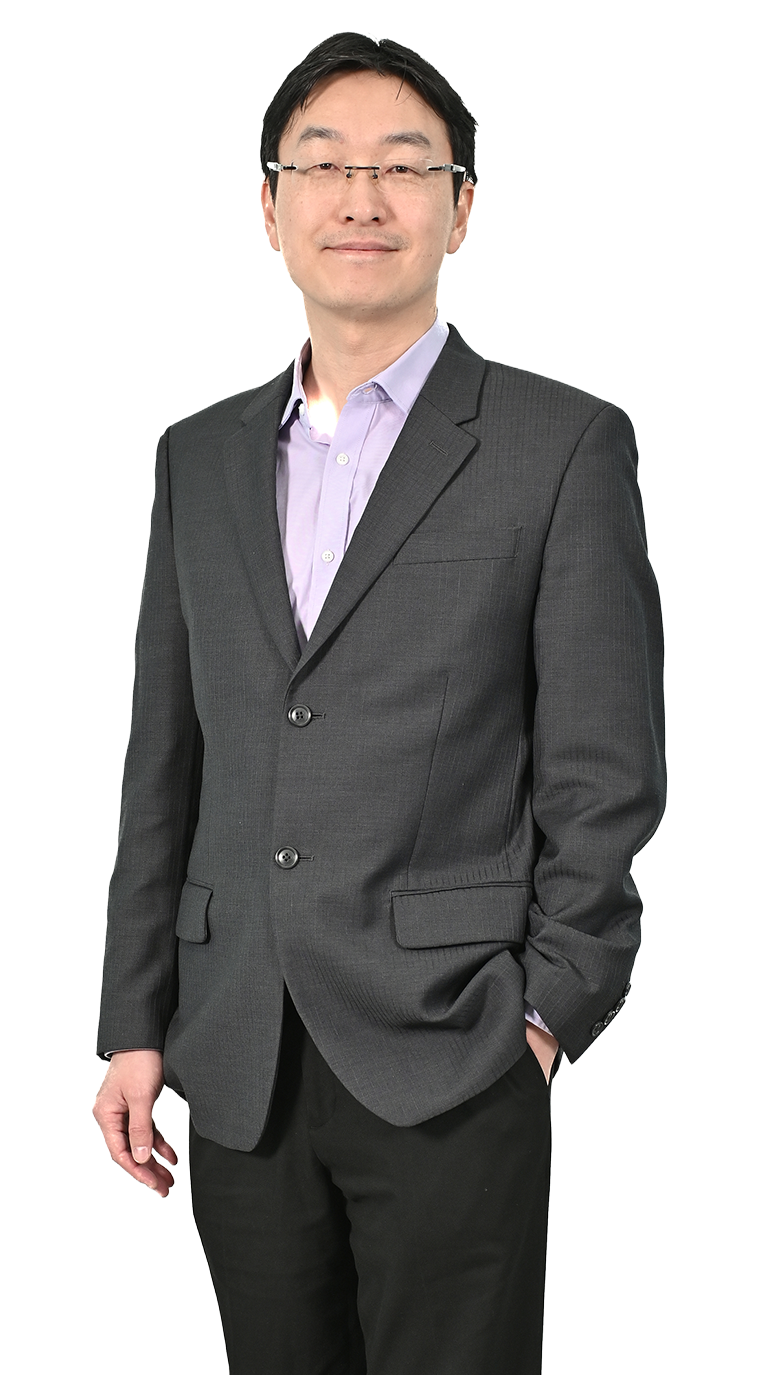
Eisung Yoon


학력
· 2013: Ph.D. Princeton University, NJ, USA
· 2006: M.A. Seoul National University, Seoul, ROK
· 2004: B.A. Seoul National University, Seoul, ROK
주요 경력
· 2018 - Present: Now Associate professor, school of Mechanical, Aerospace, and Nuclear Engineering, UNIST, Ulsan, ROK
· 2015 - 2018: Computational Scientist (staff), Scientific Computation Research Center(SCOREC), Rensselaer Polytechnic Institute, Troy, NY, USA
· 2014 - 2015: Senior Researcher, Korea Institute of Nuclear Safety, DaeJeon, ROK
· 2010 - 2014: Research Assistant (instead of compulsory military service), Korea Advanced Institute of Science and Technology, DaeJeon, ROK
핵융합 및 플라즈마 응용 연구실
Fusion and Plasma application research Laboratory (FPL)
핵융합 및 플라즈마 응용연구실은 플라즈마 이론 및 수치해석 방법론을 이용하여 플라즈마 응용 연구의 물리 해석 수행을 통해 핵융합을 포함한 다양한 분야에 기여하고자 합니다. 저희 연구실은 입자 기반 (Particle-In-Cell) 및 격자 기반 시뮬레이터를 개발 및 이용을 하고 있습니다. 고속 전산 모사를 위해 슈퍼컴퓨터에 사용되는 병렬 컴퓨팅 코드를 개발하고, 기존 직렬 코드의 병렬화, 가속화(CPU와 GPU의 threading), 최적화(Optimization)를 수행하고 있으며, 응용 프로그램의 제한 조건에 맞는 비정렬 격자 자동 생성 도구와 응용프로그램 내에서 비정렬 격자를 활용할 수 있는 API를 개발해 왔습니다. 이에 더불어 핵융합 플라즈마 난류 물리 연구를 수행해오고 있습니다.
Fusion and Plasma Application Research Laboratory(FPL) aims at resolving various problems for successful nuclear fusion experiments and commercialization through research on multi-scale interaction of plasma behavior. The research includes Eulerian & Lagrangian code development based on Gyrokinetics and MHD (magneto-hydro dynamics), extension and improvement on theories and numerical methods for simulation of long time plasma behavior, code verification & validation, and parallel programming and code optimization to utilize the latest architectures being used in supercomputers. These research subjects allow us to carry out more realistic simulation of plasma behavior in nuclear fusion reactors considering impurities and consequently to clarify and exploit underlying physics of experimental results.
Fusion and Plasma Application Research Laboratory(FPL) aims at resolving various problems for successful nuclear fusion experiments and commercialization through research on multi-scale interaction of plasma behavior. The research includes Eulerian & Lagrangian code development based on Gyrokinetics and MHD (magneto-hydro dynamics), extension and improvement on theories and numerical methods for simulation of long time plasma behavior, code verification & validation, and parallel programming and code optimization to utilize the latest architectures being used in supercomputers. These research subjects allow us to carry out more realistic simulation of plasma behavior in nuclear fusion reactors considering impurities and consequently to clarify and exploit underlying physics of experimental results.
연구분야
플라즈마 전산모사, 플라즈마 수송 물리, 고속 컴퓨팅, 자동 격자 생성, 기계 학습
Plasma simulation, Plasma transport physics, High performance computing, Automatic mesh generation, Machine Learning
연구주제
· 디지털 트윈 핵융합로 개발 기술
- 핵융합로 설계 자동화
- 시뮬레이션 가속화 (기계학습, 차원축소, 최적실험법, 슈퍼컴퓨팅)
- 비정렬 격자 자동 생성 및 이용
- 물리연구 (자이로 동역학 물리와 전산 모사, 핵융합 난류 수송 문제)
- 시각화 (언리얼 엔진, 옴니버스)
. Development of Digital Twin Technology for Fusion Reactors
- Automated Reactor Design
- Simulation Acceleration (Machine Learning, Dimensionality Reduction, Optimal Experimental Design, Supercomputing, etc...)
- Automatic Generation and Utilization of Unstructured Meshes
- Physics Research (Gyrokinetic Physics and Computational Modeling, Turbulent Transport Problems in Fusion)
- Visualization (Unreal Engine, Omniverse)
. Development of Digital Twin Technology for Fusion Reactors
- Automated Reactor Design
- Simulation Acceleration (Machine Learning, Dimensionality Reduction, Optimal Experimental Design, Supercomputing, etc...)
- Automatic Generation and Utilization of Unstructured Meshes
- Physics Research (Gyrokinetic Physics and Computational Modeling, Turbulent Transport Problems in Fusion)
- Visualization (Unreal Engine, Omniverse)
국가연구개발사업 기술 분류체계
국가과학기술표준분류
NB. 물리학 > NB04. 유체·플라즈마 > NB0403. 핵융합에너지
논문
. Computer Physics Communications / Development of novel collision detection algorithms for the estimation of fast ion losses in tokamak fusion device / Taeuk Moon, Tongnyeol Rhee, Jae-Min Kwon, Eisung Yoon / 2025-04
. Journal of Computational Physics / FPL-net: A deep learning framework for solving the nonlinear Fokker–Planck–Landau collision operator for anisotropic temperature relaxation / Hyeongjun Noh, Jimin Lee, Eisung Yoon / 2025-02
. Nuclear Fusion / Turbulence spreading induced E×B vortex flow generation in a magnetic island / E. S. Yoon, T. S. Hahm, et al. / 2024-10